Proactive & penny wise
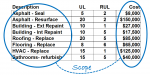
We counsel our house-of-worship clients to be proactive by preparing for the repair and replacement expenses that are both inevitable and predictable. But, we also counsel them to be wise.
Read More >

We counsel our house-of-worship clients to be proactive by preparing for the repair and replacement expenses that are both inevitable and predictable. But, we also counsel them to be wise.
Read More >
All employers — even churches — must be aware that the Department of Labor (DOL) takes the default position that all employees are nonexempt. This means they are eligible for minimum wage and overtime pay unless the employer can demonstrate that an exemption outlined by the DOL and the Act applies.
Read More >
By Tim Cool A while back, Gary Nicholson, a church architect formerly with LifeWay in Nashville, wrote a blog about 9 diseases of church facilities. Since that post, our researchers have determined that there are additional diseases that many church facilities — and those involved in church facility care and development — may suffer from. […]
Read More >
By Dan Mikes Religious institution expansion appears to be on the rebound, and the willingness of financial institutions to support this growth remains strong. At the same time, the religious institution segment as a whole seems to have learned from some of the challenges it faced through the downturn. In this post-meltdown era, physical expansion plans […]
Read More >
With a sufficient base of customers, procurement services companies are able to leverage this collective volume and offer discounts and value to a variety of smaller clients — including, for example, church ministries, which might not buy quite as much on their own.
Read More >
Church executives of all types know that the church is, in some ways, a business. Whether you’re a lead pastor, executive pastor, business administrator or denominational official, you attend to congregational business of facilities, finances, human resources, information technology, and a host of other issues on a daily basis. For example, take a quick test […]
Read More >
For church leaders, analytics and modeling can sound cold. Impersonal. Nothing could be further from the truth.
Read More >
By Jayson D. Bradley Most of us — including pastors — like to imagine that the summer exists as a time of relaxation … a time away from our harried schedules. Deep down, though, we know this isn’t true. We’re actually just cramming recreational hobbies and barbecues into already bursting calendars. Parents with school-aged children […]
Read More >
Every church leader recognizes that there are times when we must adapt the way we do ministry. But, when it comes to giving, we’re not always so quick to adapt.
Read More >
With six campuses, more than 36,000 active members, and 1,050 full-and part-time staff, Gateway Church in Dallas / Fort Worth simply can’t function at maximum efficiency without a streamlined, accessible and accurate accounting “engine” — something they didn’t have…until now. When Lead Director of Business Administration Monty Carpenter joined the Gateway staff in 2011, incredible […]
Read More >